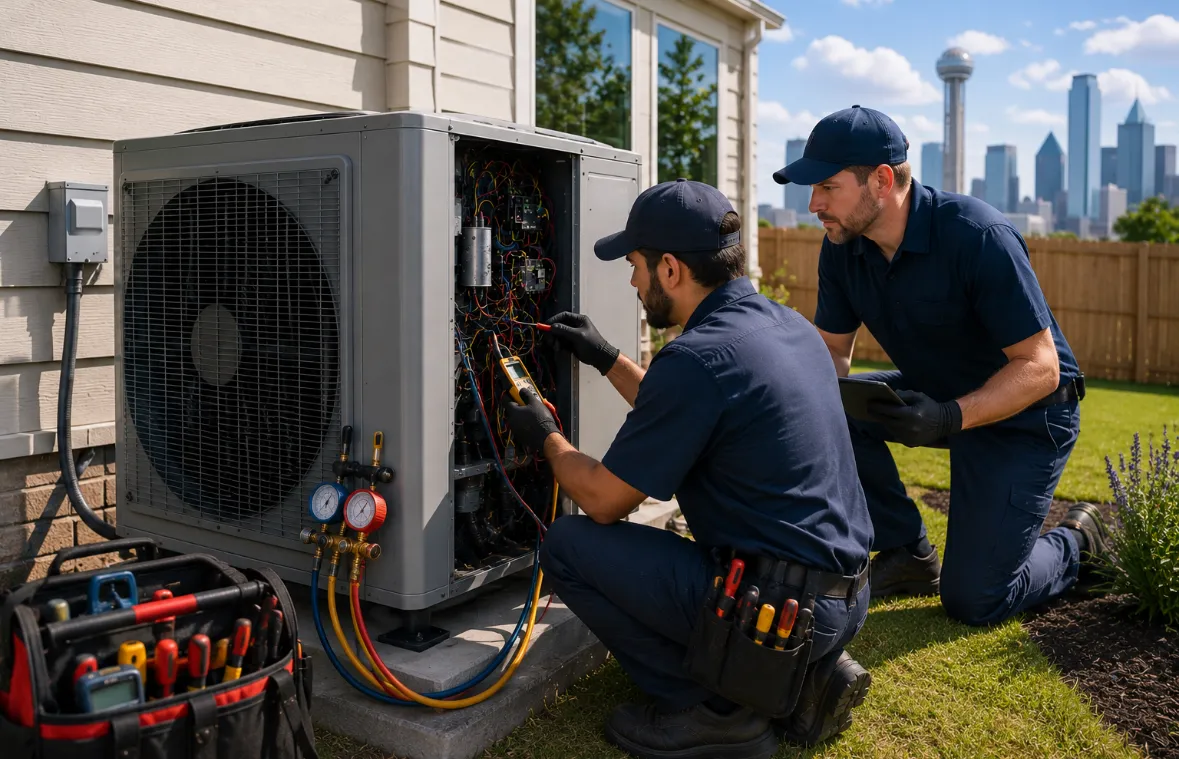
Is your air conditioner acting strange but you’re not sure if it’s serious? Recognizing HVAC maintenance signs early can save you from expensive repairs and uncomfortable breakdowns during peak weather.
Many homeowners ignore small warning signals until the system fails completely, often during the hottest days when repairs take longer and cost more.
In this guide, we’ll walk through the key HVAC maintenance signs to watch for, why they happen, and what steps you should take before the problem gets worse.
1. Unusual Noises Coming from the Unit
One of the most common HVAC maintenance signs is strange noise during operation, which often indicates a mechanical issue.
- Grinding or screeching sounds may point to worn-out motor bearings
- Rattling noises often mean loose parts or debris inside the unit
- Clicking sounds during startup can indicate electrical control issues
Ignoring unusual noises can lead to complete compressor failure, which is significantly more expensive to repair than early servicing.
2. Reduced Cooling or Airflow
If your HVAC system isn’t cooling the way it used to, this is one of the clearest HVAC maintenance signs indicating an underlying problem.
- Check if certain rooms feel warmer despite the AC running
- Weak airflow from vents often points to a clogged filter or duct blockage
- Inconsistent cooling may indicate low refrigerant levels
(Internal link suggestion: link to “how to improve AC cooling efficiency at home”)
Addressing airflow issues early prevents the compressor from overworking, which can shorten the system’s overall lifespan.
3. Unpleasant Odors When the System Runs
Bad smells are often overlooked but are important HVAC maintenance signs that shouldn’t be ignored.
- A musty smell may indicate mold or mildew buildup inside the unit
- A burning odor could signal electrical wiring issues
- Stale air smell often points to a dirty or clogged filter
If you notice a burning smell specifically, it’s best to turn off the unit immediately and call a technician, as this can indicate a safety risk.
4. Rising Electricity Bills Without Increased Usage
A sudden spike in electricity bills, without any change in usage habits, is one of the more financially noticeable HVAC maintenance signs.
- Dirty filters force the system to work harder, increasing power consumption
- Refrigerant leaks reduce efficiency, requiring longer run times
- Aging components often draw more power to perform the same function
Monitoring your electricity bills seasonally can help you catch efficiency issues before they become major expenses.
5. Frequent Cycling On and Off
If your HVAC system turns on and off more frequently than usual, this is a key sign that maintenance is overdue.
- Short cycling often points to thermostat calibration issues
- It can also indicate an oversized or improperly installed unit
- Dirty coils forcing the system to overheat can trigger frequent shutdowns
(Internal link suggestion: link to “common HVAC problems and how to fix them”)
Frequent cycling not only increases energy consumption but also accelerates wear on internal components.
6. Why Ignoring HVAC Maintenance Signs Is Costly
Understanding the long-term impact of ignoring HVAC maintenance signs helps explain why timely action matters.
- Minor issues like dirty filters can escalate into compressor damage
- Delayed repairs often cost significantly more than routine servicing
- Reduced efficiency leads to higher electricity bills over time
- Neglected systems have shorter overall lifespans
Just like ignoring small home repairs, HVAC issues rarely resolve on their own and tend to worsen with continued use.
7. DIY Checks vs. Professional HVAC Maintenance
While some steps can be done at home, certain HVAC maintenance signs require professional attention.
You can typically handle:
- Cleaning or replacing air filters regularly
- Clearing debris from outdoor units
- Checking thermostat settings and batteries
Professional service is needed for:
- Refrigerant leaks or pressure issues
- Electrical or wiring-related problems
- Compressor or motor repairs
Scheduling professional maintenance at least once or twice a year helps catch issues before they turn into visible HVAC maintenance signs.
Frequently Asked Questions
1. What are the most common HVAC maintenance signs to watch for? Unusual noises, reduced airflow, bad odors, rising electricity bills, and frequent cycling are the most common warning signs.
2. How often should HVAC systems be serviced? Most systems benefit from professional servicing at least once or twice a year, ideally before peak summer and after monsoon.
3. Can dirty filters really affect HVAC performance? Yes, dirty filters restrict airflow, forcing the system to work harder and reducing overall cooling efficiency.
4. Is a burning smell from an AC unit dangerous? Yes, a burning smell can indicate electrical issues and should be checked immediately by a professional technician.
5. Why is my HVAC system cycling on and off frequently? This is often caused by thermostat issues, dirty coils, or an improperly sized unit, all of which need inspection.
6. Can ignoring HVAC maintenance signs increase electricity bills? Yes, an inefficient system consumes more power to achieve the same cooling output, leading to higher bills over time.
Conclusion
Recognizing HVAC maintenance signs early — from strange noises to rising electricity bills — can save you from costly breakdowns and uncomfortable indoor temperatures. Regular attention to these warning signals keeps your system running efficiently for longer.
Don’t wait for a complete breakdown before taking action. Simple checks and timely professional servicing can extend your HVAC system’s life significantly.
Noticed any of these signs at home? Schedule an HVAC inspection today to catch small issues before they become expensive repairs.
Image Alt Text Suggestions:
- “HVAC maintenance signs — technician inspecting outdoor AC unit”
- “Dirty air filter causing reduced HVAC airflow and efficiency”
- “Homeowner checking thermostat for HVAC maintenance issues”